
12 Ways How Being Shy Is Secretly Hurting Your Career And What To Do About It
Discover 12 hidden ways shyness is hurting your career and learn practical steps to break free. From missed promotions to undervalued work, see how to build confidence, set boundaries, and unlock your full potential.
SELF-HELP & PERSONAL GROWTH
E.O. Francis
10/4/202510 min read
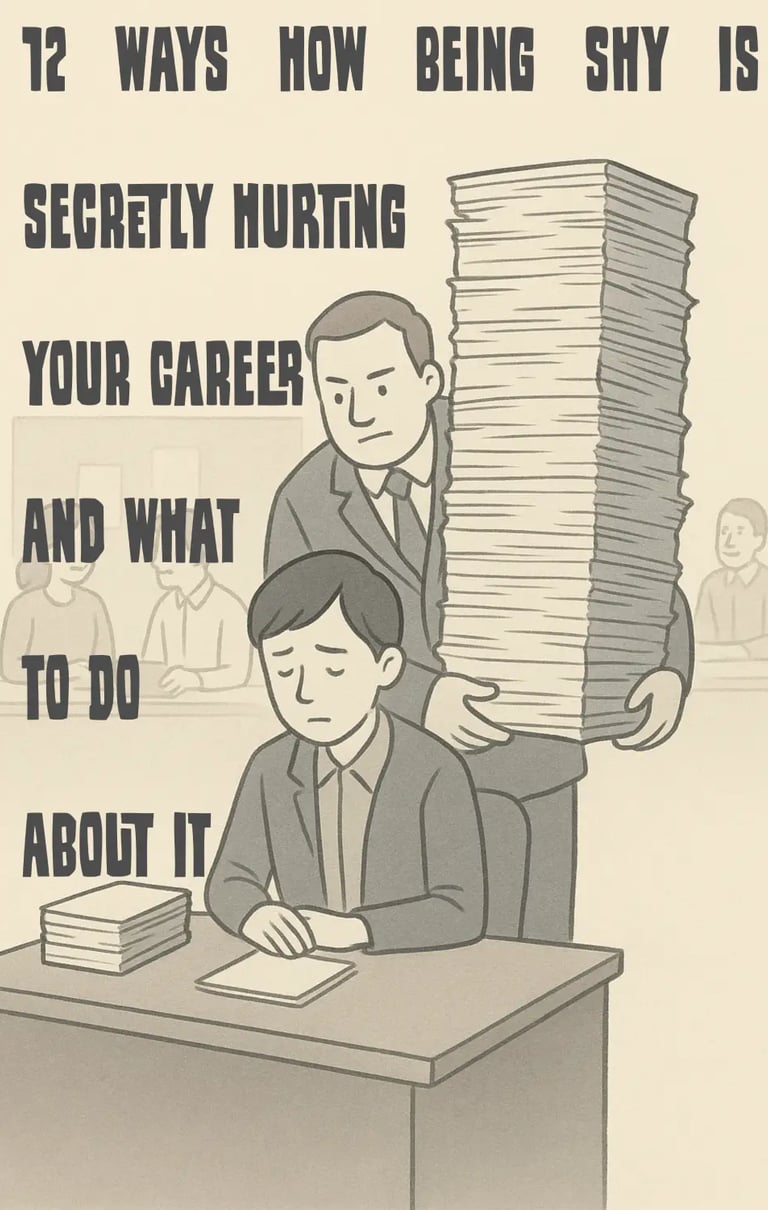
If I had to start over in my career again, I would not let shyness hold me back for years the way it once did. I learned the hard way how being shy can hurt you at work and in life, but I also learned what you can do to change it right now.
Shyness can quietly block the promotions you deserve, keep your efforts unnoticed, and stop you from building the connections that lead to growth. What feels like staying safe and avoiding conflict often turns into being overlooked, undervalued, and overworked.
In this post, I will share the 12 ways being shy is secretly hurting your career. More importantly, I will also show you how to turn each one around so you can move forward with confidence and claim the recognition you deserve.
Section 1: The Silent Costs of Shyness at Work
One of the hardest lessons I had to learn was that silence speaks louder than words in the workplace. People may not say it out loud, but they notice when you stay quiet. They draw their own conclusions, and often those conclusions are not in your favor. This is how being shy is hurting you without you even realizing it.
Bosses Take Advantage Of You
I remember the first time my manager handed me extra work that clearly belonged to someone else. I did not complain. I told myself that working harder would prove my value. What really happened was that I became the person who could be loaded with more tasks without resistance.
When you stay quiet, unfair expectations quickly become normal. Bosses assume you can handle more, and instead of rewarding you, they push further. Over time, you carry more than your fair share while others do less. Silence is not seen as strength in this case, it is seen as permission.
Extra Work Gets Pushed To You
Shyness is like an open invitation for extra tasks. In team settings, people quickly learn who will speak up and who will not. The one who stays silent often ends up with the leftover work. I have sat in meetings where projects were passed around like cards at a table. The ones who said “I can’t take this right now” were respected. The one who sat quietly was me, and I got the extra card every time.
Your silence sends a message that you are available, even when you are not. Colleagues who push back draw boundaries and gain respect. The contrast is clear: those who speak up keep balance, those who stay quiet take the weight.
Hard To Build Connections
Work is not only about skill, it is also about relationships. I learned this when I watched less experienced coworkers climb faster because they were better at networking. They talked, shared, and connected, while I stayed in the corner hoping my work would speak for itself. It did not.
Shyness builds a wall between you and others. When you avoid conversations, you miss chances to form bonds that open doors later. People promote people they know and trust, not the faces they only see in silence. In truth, your talent gets overlooked if you never step into the room where relationships are made.
You Get Underpaid And Overworked
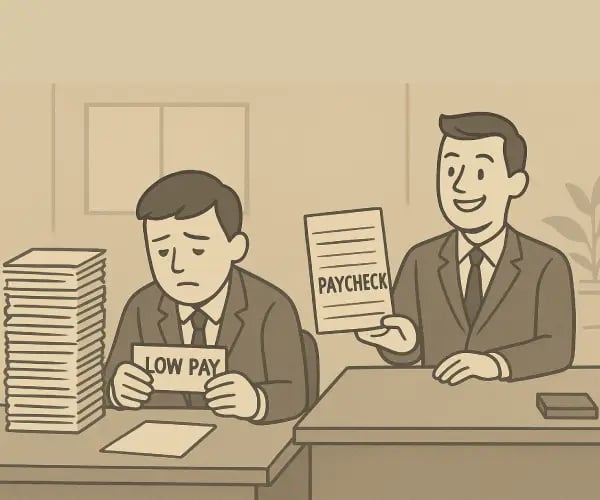
One of the clearest ways being shy is hurting you is in your paycheck. I once accepted a salary offer without question. My thought was, “At least they hired me.” Later I found out my coworkers negotiated and earned more for the same role. The difference was not skill. It was what they asked, and I did not.
The same applies to workload. When you never push back, your plate grows heavier. When you never negotiate, your pay stays smaller. Speaking up, even in small ways, changes how others value your time and effort. Every moment you stay silent costs you more than you realize.
Section 2: How Shyness Undermines Your Value
The longer I stayed shy, the more I realized it was not just about missed chances. It was about how people saw me. Shyness made others believe my time, my effort, and even my ideas were worth less. This is another way how being shy is hurting you, because it quietly lowers your value in the eyes of everyone around you.
People Value Your Time Less
When you never set boundaries, people assume you do not have any. I used to answer late emails right away, stay past closing hours, and say yes to every request. What I thought was dedication turned into an open door for others to step through whenever they wanted.
The truth is, if you do not protect your time, no one else will. Constant interruptions and unpaid overtime do not make you look like a hero. They make you look like someone who can always be stretched further. Shyness stops you from saying “not right now,” but without those words, you teach people to treat your time as less important than theirs.
Underselling Your True Value
For years, I downplayed my achievements because I felt awkward talking about them. When someone asked how a project went, I would say, “It was fine” instead of “I led the team that delivered ahead of schedule.” That silence cost me opportunities I didn’t even know I was losing.
Shyness makes you shrink your story. The problem is, no one else will tell it for you. If you do not speak up about what you bring to the table, you stay invisible when it matters most. Career progression depends on visibility as much as skill, and when you undersell yourself, you hand the spotlight to someone else.
Colleagues Take You For Granted
Being quiet can sometimes feel easier than speaking up. I thought that by always agreeing, I was being helpful. What I did not realize was that it created an imbalance. My colleagues knew I would say yes, even when I was stretched too thin. They stopped seeing it as help and started seeing it as the norm.
Too much agreeableness backfires. People respect those who stand firm, not those who never resist. When you stay silent, others stop checking if you are okay with the extra work, and they start expecting it. Over time, that turns into being taken for granted, which chips away at your confidence even more.
Too Afraid To Speak Your Mind
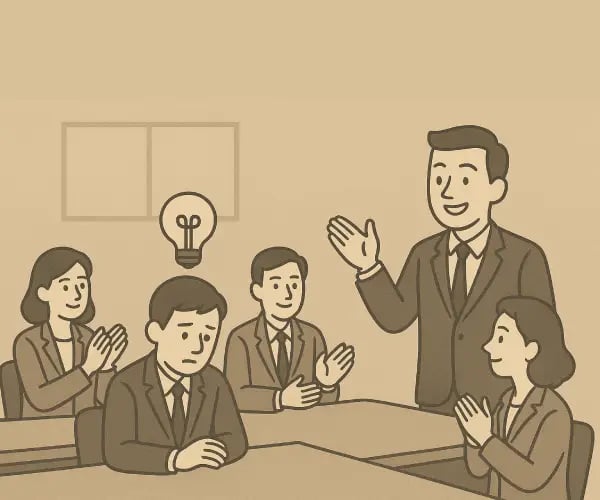
The biggest weight of shyness is not the tasks or the long hours. It is the silence that kills your ideas. I had moments when I knew the answer in meetings, but I kept it to myself. Then someone else would say the exact same thing and get praised for it.
Every time you hold back, you lose a chance to shape the room. Leadership is not just about titles, it is about influence. Speaking your mind puts your perspective into play. Staying silent keeps you on the sidelines. When your voice is missing, so are your chances to step into leadership roles.
Section 3: Missed Growth And Recognition
One of the most painful truths I had to face was this: skill alone is not enough. I used to believe that if I worked hard, my results would speak for themselves. But the reality is that work does not speak, people do. And if you stay silent, you stay unseen. This is another way how being shy is hurting you. it quietly keeps you from the growth and recognition you deserve.
Harder To Build A Reputation
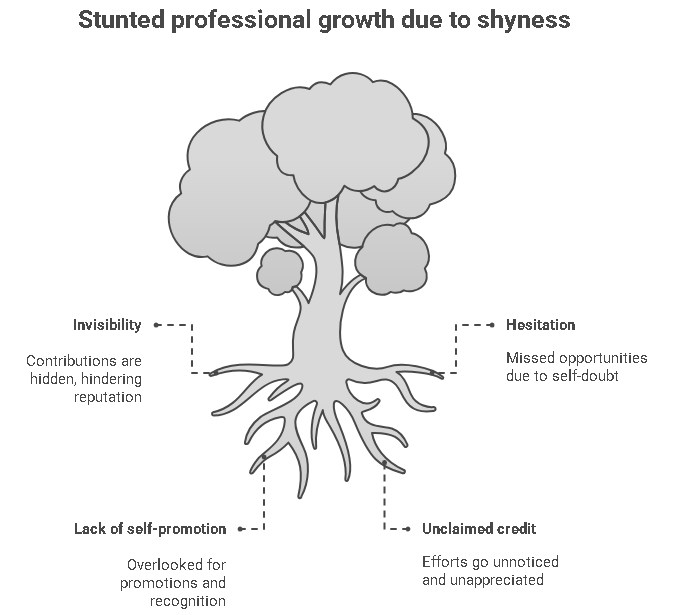
At work, reputation is not built only on what you deliver. It is built on how visible you are while delivering it. For years, I focused only on finishing tasks, but I stayed invisible in the process. My name rarely came up in conversations about leadership or success, even though my work was solid.
The problem with shyness is that it hides your contributions. If people do not hear your voice or see your presence, they cannot attach your name to progress. Reputation requires visibility, and silence blocks that path every time.
Let Opportunities Pass You By
Fear can be paralyzing. I remember when a leadership role opened up in my department. My first thought was, “I am not ready.” So I said nothing and watched someone else step forward. The person who got the role was not more skilled, they were just willing to say yes.
Shyness feeds hesitation. You second-guess yourself until the chance disappears. Whether it is applying for a project, leading a meeting, or sharing an idea, silence keeps you on the sidelines. Every opportunity you let slip is one more step backward while others move forward.
Less Likely To Get Promoted
Promotion is rarely just about performance. It is about presence, confidence, and the ability to claim your place. I saw coworkers with the same level of skill move up while I stayed in the same spot. The difference was not talent. It was boldness.
When you never negotiate, you remain underpaid. When you never volunteer, you remain overlooked. When you never share your goals, leaders assume you are content where you are. Equal skill does not equal equal opportunity, visibility tips the scale, and shyness tilts it against you.
Your Efforts Go Unrecognized
Few things feel as heavy as working hard and not being seen. I once stayed late for weeks to finish a major project. When the recognition came, my manager praised the team but never mentioned my name. I sat there smiling, but inside I felt invisible.
This happens when you never speak up about what you contribute. People are not mind readers. If you do not highlight your role, your efforts blend into the background. Speaking up ensures that your work gets the credit it deserves. Recognition is not given freely. it is claimed through visibility, and shyness keeps you from claiming it.
Section 4: Breaking Free From The Cycle
Shyness does not have to define your career. I spent years feeling trapped by it, but I found that change starts with small, consistent steps. The truth is, you do not need to transform overnight. You only need to practice courage one moment at a time, and the results will build.
How To Overcome Shyness At Work
The first step for me was practicing my voice. I started with simple things, like asking a question in a meeting or offering one small suggestion. At first it felt terrifying, but the more I did it, the easier it became.
I also learned to set boundaries. Saying “I cannot take this on right now” felt uncomfortable the first time, but it taught people to respect my limits. Each boundary I set gave me back a piece of my confidence. The real-world result was that people stopped assuming I was available for everything, and I finally had control over my workload.
Building Confidence In Daily Habits
Confidence is not built in big leaps. It grows in small daily habits. I practiced speaking up once in every meeting, even if it was just to agree with a point and add a sentence of my own. I made it a rule to ask at least one question when I felt uncertain, instead of staying silent.
I also trained myself to pause before saying yes. That single pause helped me think clearly instead of agreeing out of fear. Over time, these habits stacked up. The shy voice I once had started turning into a steady one, and people began noticing the change.
Turning Quiet Strength Into Career Power
Being shy does not mean you are weak. In fact, many strengths come with being quiet; like deep listening, empathy, and careful preparation. The key is to stop letting fear silence those strengths.
I found that when I combined my natural ability to listen with the courage to finally speak, my ideas carried more weight. People valued my input because they knew I thought deeply before sharing. Once I embraced my quiet strengths instead of hiding them, I stopped seeing shyness as a flaw and started using it as power.
Conclusion
Looking back, I can see clearly how being shy is hurting you in ways that are easy to miss but impossible to ignore. It allows bosses to take advantage, adds extra work, blocks connections, lowers your pay, and makes others value your time less. It keeps you from showing your true worth, makes colleagues take you for granted, and silences your best ideas. It hides your reputation, forces you to watch opportunities slip away, holds you back from promotions, and leaves your efforts unrecognized.
But here is the good news: shyness does not have to define you forever. The moment you stop letting it dictate your choices, you open doors to recognition, growth, and freedom. It all begins with one small step, one word spoken, one boundary set, one question asked. That small act of courage is the start of the career and life you truly deserve.
Frequently asked questions
What’s the best way to overcome shyness?
The best way to overcome shyness is through small, consistent steps that build confidence. Start by practicing your voice in low-pressure situations, like asking a simple question in a meeting or making short conversations. Setting boundaries, celebrating small wins, and gradually pushing yourself outside your comfort zone helps rewire the fear of being judged. Over time, these small actions compound into confidence.
Is being shy permanent?
No, shyness is not permanent. While some people naturally lean toward being more reserved, shyness is a learned behavior that can be unlearned. With practice, mindset shifts, and confidence-building habits, anyone can reduce shyness and learn to communicate more openly.
What are the consequences of being shy?
Being shy can quietly hurt your career and personal growth. It may lead to missed promotions, undervalued work, lower pay, and fewer connections. Shy individuals are often overlooked in group settings, taken for granted, or seen as less assertive. In the long run, shyness can hold you back from recognition, opportunities, and leadership roles.
What kind of trauma causes shyness?
Traumas such as childhood bullying, emotional neglect, harsh criticism, or overprotective parenting can contribute to shyness. These experiences can create a lasting fear of rejection, embarrassment, or “getting it wrong.” However, with self-awareness and healing practices, you can overcome these patterns and rebuild confidence.
What is the root cause of shyness?
Shyness often stems from a mix of factors, including early childhood experiences, fear of judgment, low self-esteem, and sometimes social anxiety. For some, it develops from being overly criticized or not encouraged to express themselves growing up. Others may have a naturally sensitive temperament that makes them more cautious in social settings.
Do shy people have high IQ?
Studies suggest there can be a link between shyness (or introversion) and higher levels of creativity, observation, and analytical thinking. While not all shy people have high IQs, many are deep thinkers and highly empathetic. Their strength lies in listening, reflecting, and problem-solving skills that become powerful when combined with confidence in speaking up.