
Stop Asking and Start Winning: How to Master Strategic Networking
Stop asking and start winning with strategic networking. Learn the offer mentality, status signals, and relationship tactics that unlock elite opportunities.
CAREER DEVELOPMENT
E.O. FRANCIS
2/6/20265 min read
The Modern Networking Mindset
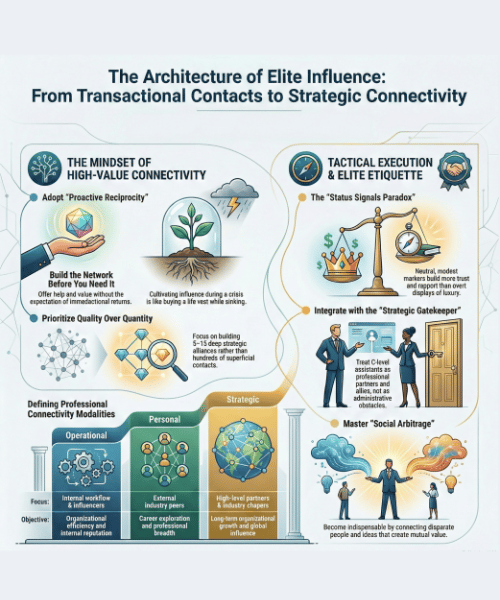
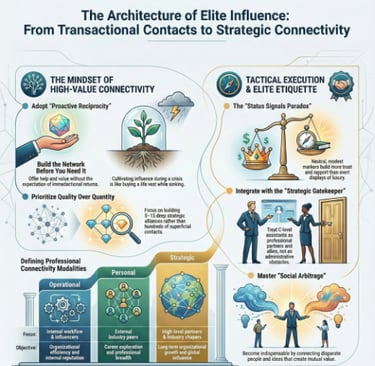
Strategic Networking is the secret to building a powerful career and reaching your biggest life goals. Many people feel bad or fake when they try to meet new people for work. This happens because most networkers only think about what they can get from others. You must stop asking for things and start thinking about how you can help. This offer mentality makes you seem like a peer rather than a person who needs a favor. High-status people are much more likely to trust someone who brings value to the room first. Generosity builds a foundation of trust that can last for your entire professional life.
The "Offer Mentality" Paradox
The transition from an outsider to a participant in high-status networks involves a shift toward a model of strategic integration. Experts Vanessa Van Edwards and Keith Ferrazzi argue that focusing on adding value is the only viable path to real influence. This creates a multiplier effect where your readiness to assist others results in a high-density support network that can be mobilized at critical career junctures.
"Instead of focusing on what I need, I focus on what I can offer. I have better conversations, meet more interesting people and have made way more business deals."
High-value individuals are constantly inundated with requests from subordinates who want something from them. They value relevance and discretion over transactional interruptions that waste their time. Leading with generosity signals that you possess the resources and competence of an equal partner. This approach lowers their social defenses and fosters an environment where genuine alliances can eventually flourish.
Mastering the Art of Strategic Visibility
Strategic networking combines your internal office relationships with your external industry contacts for better results. You must target specific people to meet and understand exactly why they matter to your goals. The Never Eat Alone rule requires you to maintain a very full social and event calendar. You should plan multiple breakfasts and lunches with influential peers during every single work week. Staying visible ensures that you remain the first person others think of for high-level new opportunities. Mastering this art requires constant effort and a very clear strategy for all your social interactions.
The Status Signal Paradox
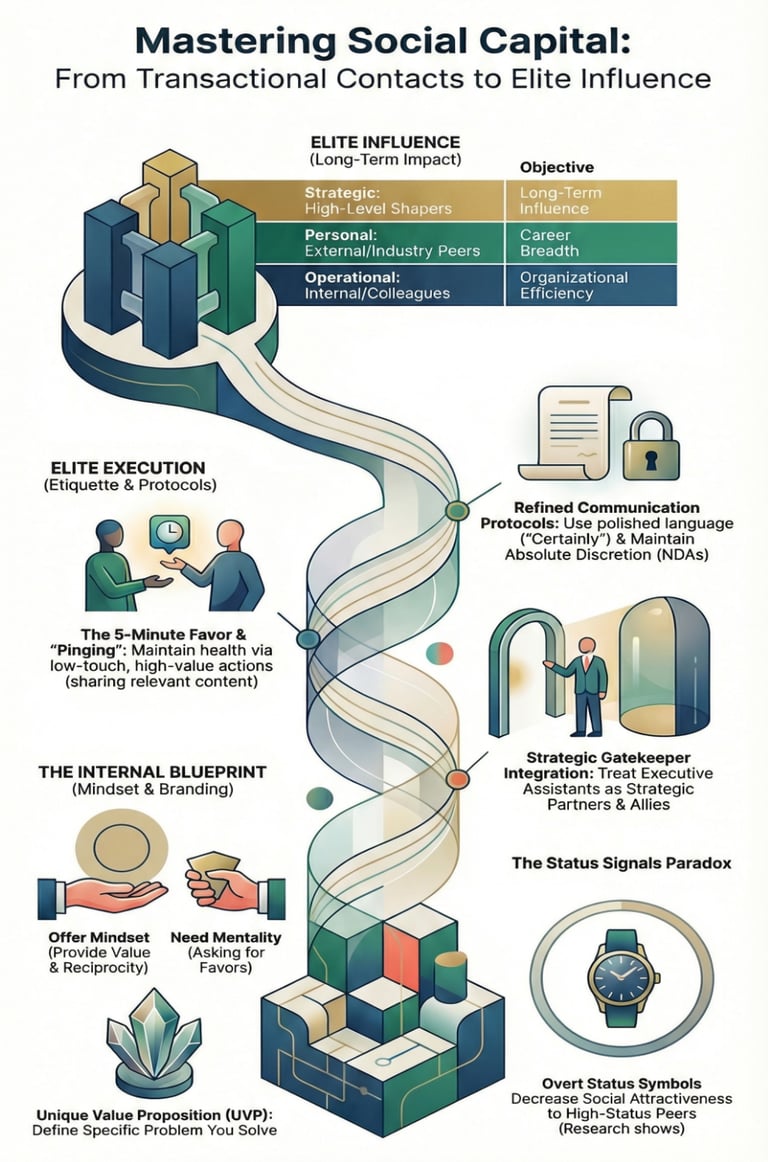
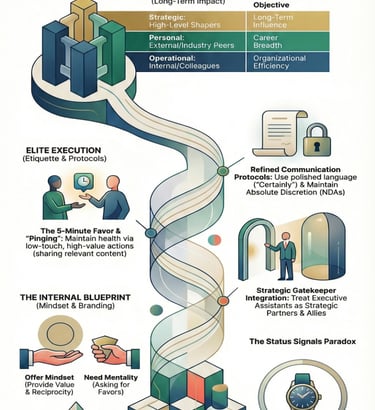
Research on the Status Signals Paradox reveals a major error made by those attempting to penetrate elite circles. Presenters often believe that overt luxury items make them look more attractive to high-status peers. However, the Saks Fifth Avenue experiment showed that observers consistently favored meeting individuals wearing neutral, less prestigious brands. Overt signaling triggers competitive anxieties and social friction that damage the formation of authentic rapport.
Modest signaling facilitates deeper rapport because it removes the pressure of immediate social comparison among elites. When you appear approachable, high-status peers feel more comfortable engaging with you in meaningful business discussions. This lack of friction allows you to orchestrate alliances based on mutual respect rather than envy. True social capital engineering relies on building trust through competence rather than through intimidating displays of wealth and network topology.
Turning Gatekeepers into Strategic Allies
The C-level Executive Assistant is a high-performing strategic partner and a world-class gatekeeper for the principal. They protect the executive's time like a fortress and triage every request that comes through the door. Treat these professionals with the authority and respect they deserve as the orchestrators of the office operations. Aim to call early in the morning or late in the afternoon to bypass the thickest screening filters.
Sounding like a peer to the principal is the most effective way to establish immediate credibility with them. Use a confident and conversational tone during your outreach to signal that you belong in their inner circle. This peer-level behavior helps you cement a relationship with the person who holds the keys to the calendar. Gatekeepers are far more likely to grant access to individuals who behave like colleagues rather than subordinates.
The Power of the 5-Minute Favor
Superconnectors thrive by bringing a diversity of people together to create mutual value and professional success. They use social arbitrage to make themselves indispensable to their network through small acts of proactive reciprocity.
1. Share a relevant industry article that reflects the specific professional interests of your contact.
2. Make a digital introduction between two parties who can provide significant value to each other.
3. Congratulate a peer on a recent promotion or a major milestone they shared on social media.
These small favors keep your professional relationships alive without being intrusive or demanding to busy people. Consistent pinging ensures that your social capital does not die from neglect while you focus on your work. You build deep social density by being a source of constant support for the people around you.
Avoid These Seven Critical Faux Pas
Prejudging Potential Partners
Dismissing others based on appearance or current title creates a toxic professional reputation that precedes you. Word travels fast in elite circles, and being labeled as disrespectful can permanently close high-status doors. Every interaction is an opportunity to practice your professional presence and build long-term social capital.
Failure of Due Diligence
Approaching a headliner at an event by claiming their presence is a surprise exposes a massive lack of diligence. Peer-level status is earned through research and the audacity to reach out via direct channels before an event starts. Failing to prepare signals that you are an outsider hoping for luck rather than a strategist with a plan.
Referencing the Wrong Event
Referencing the incorrect meeting place in a follow-up email suggests that your networking is aggressive and sloppy. This error damages your credibility immediately because it proves you do not value the individual enough to remember the context. It makes your outreach feel transactional and reduces your professional standing to that of a low-level solicitor.
Gossiping to the Wrong Crowd
Sharing sensitive details about influencers is a dangerous social gamble that usually results in immediate exclusion from inner circles. You may find that your audience has close ties to the subject of your gossip, leading to cold stares and rejection. Proving that you cannot be trusted with information is the fastest way to sabotage a burgeoning reputation.
Not Remembering Names
Forgetting a contact's name or what they represent is deeply offensive and causes an immediate loss of social momentum. High-value conversations rely on the feeling of mutual importance, which is destroyed when you fail at basic recognition. This mistake signals that you are inattentive and dismissive of the people who could advance your mission.
Asking Instead of Offering
Leading with your own needs creates an immediate burden for individuals who are already overserved by transactional requests. This approach triggers defensive barriers and prevents the formation of the authentic rapport required for elite alliances. To earn the right to ask for help, you must first establish your value through proactive generosity.
Failing to Follow Up
Failing to reach out after a meaningful interaction shows a lack of genuine interest and wastes the capital you built. However, checking in repeatedly without a clear purpose can also annoy high-value contacts and mark you as high-maintenance. Striking a balance through purposeful, low-touch engagement is the only way to cement your reputation for the long term.
Conclusion: Build It Before You Need It
Relationships require a significant amount of time to cultivate properly before you need any help. You must build your network long before a crisis strikes or your current ship starts sinking. Waiting until you are desperate to network is like buying a safety vest after the vessel founders. Strategic networking is about the depth of your connections rather than the total number of people met. Focus on building a solid set of meaningful relationships starting today for your future career success. Your professional network is the foundation for every high-stakes opportunity you will ever find in life. How would you define your Blue Flame at the intersection of your mission, passion, and ability?